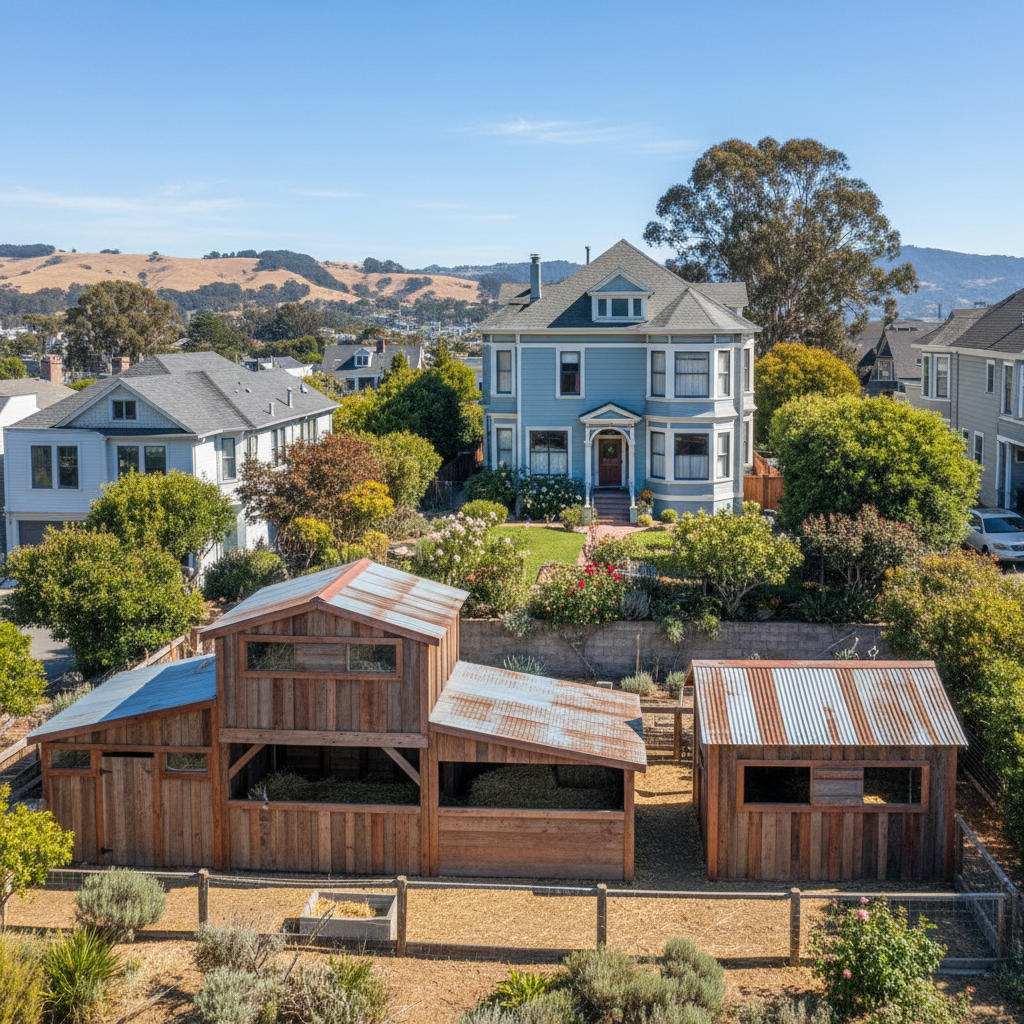
You wouldn't believe how many folks in San Francisco are getting into urban farming these days. From chickens pecking around in the Outer Sunset to goats munching away up in Bernal Heights, honestly, I've seen it all. And with those animals, well, you naturally need a proper place for them to live. But putting up a livestock shelter here isn't like just throwing together a lean-to out in the Central Valley. We've got our own unique challenges, and if you don't plan for 'em, you're definitely going to run into problems down the line.
The SF Climate: Not Always Sunny, Is It?
First off, let's talk about our weather. Everyone outside San Francisco thinks it's always sunny, but you and I know that's just not true. We get that thick, damp fog rolling in, especially in those western neighborhoods. That constant moisture? It's a real killer for wood if you don't treat it right. You need materials that can really stand up to it, and construction techniques that stop rot and mildew in their tracks. I'm talking about good ventilation, decent overhangs, and foundations that lift the whole structure off the wet ground. You can't just slap some plywood together and call it done; that thing'll be falling apart in a couple of years, and your animals will be absolutely miserable.
Building Codes & Neighborhood Vibes
Then there are the rules. San Francisco has some pretty specific building codes, even for something that seems as simple as a chicken coop or a goat shed. You've got setback requirements, height restrictions, and sometimes even aesthetic guidelines to consider, especially if you're in a historic district or a neighborhood with a strong HOA. You really don't want to build a great shelter only to find out you have to tear it down because you didn't pull the right permits, or you're too close to your neighbor's fence. It's a headache nobody needs, and it's exactly why having someone who knows the local regulations inside and out is so important.
Space Constraints: We're Not on a Ranch, Are We?
Let's be honest, most of us aren't working with acres of land here. Backyard space is a precious commodity in San Francisco. So, your livestock shelter has to be efficient. It's not just about fitting the animals in; it's about making sure they have enough room to move comfortably, that you can clean it easily, and that there's space for feed storage — all without taking over your entire yard. We often have to get pretty creative with multi-functional designs or by integrating structures into existing landscaping. It's a puzzle, no doubt, and you need someone who's good at solving puzzles in tight spaces.
Pest Control & Predators
You might think urban areas don't have predators, but you'd be wrong. Raccoons, opossums, even coyotes sometimes make their way into the city, especially in areas bordering parks or open spaces. And let's not forget rats and mice, which are always looking for a free meal. Your shelter needs to be built like a fortress against these critters. That means sturdy hardware cloth, secure latches, and absolutely no easy entry points. I've heard too many sad stories because a coop wasn't built to withstand a determined raccoon. It's not just about keeping the animals in; it's about keeping the bad guys out.
Why Local Expertise Matters
This is where a local outfit like San Francisco Shed Builders really shines. We're not just building sheds; we're building solutions specifically for San Francisco backyards. We understand the soil conditions, the microclimates, the building department's little quirks, and what truly works for urban farming in this city. We've built shelters for everything from a few backyard hens in Noe Valley to a small flock of sheep on a larger property south of the city. We know what materials will last, what designs are practical for tight spaces, and how to navigate the permitting process so you don't have to worry about it.
You want a shelter that's going to protect your animals, last for years, and not cause you any grief with the city or your neighbors. That means getting it right the first time. Don't cut corners on something that's protecting your animals and your investment, okay? Give us a call, and we can talk through what your urban farm needs.